Nov 4, 2026
LID Cabo Verde 2026: Lessons on Legal and Digital Identity
LID Cabo Verde took place on 2 November 2026. It brought together people who register, identify and serve citizens: public bodies, identity specialists and technology partners. The programme combined talks, a panel and a Digital ID Hub with live technology.
The event came at a useful moment. Cabo Verde has reached near-universal birth registration and is now building services on top of it. Around the world, about 800 million people still cannot prove who they are. Public services everywhere are asking why they still request so many documents. This article covers the main ideas from the day, the questions they raise and what other programmes can take from Cabo Verde's experience.
Why LID Cabo Verde Mattered
Three ideas made this edition worth following.
The foundation is in place. Within five years of linking civil registration with the national identity system, Cabo Verde reached 99% birth registration. Every child receives a unique identification number at birth. The country is a working example of what comes after registration.
The global gap is still large. According to the World Bank ID4D Global Dataset 2025, about 800 million people have no proof of legal identity. Sustainable Development Goal 16.9 promises legal identity for all by 2030. At the current pace, that target is decades away.
Services are moving to attributes. Instead of asking for copies of ID cards and certificates, a service can check the source and receive only what it needs. The hard part is doing this without losing trust.
Topics Discussed
The size of the identity gap
Caixa Mágica Software opened with the global numbers. People without proof of identity fell from close to 1 billion in 2017 to 850 million in 2021. In 2025 the figure stood at about 800 million, roughly one person in ten. A simple projection in the talk showed that, at the pace of the last eight years, SDG 16.9 would only be met after 2050. The presentation also pointed to around 2.8 billion people who live in economies without a digital identity they can use to authenticate online.
Documents, data and attributes
DevTrust Consulting summed up the shift in two lines: "Document to data. Data to attribute." Many services still ask citizens to attach their ID card, a birth certificate or another record. Then they ask them to type the same data again. The talk asked whether a service needs the document or what the document proves.
The proposed model has three steps. The citizen authenticates. The service checks the competent source directly. Only the necessary attribute is shared, such as age or place of residence. Paperwork drops. Fraud gets harder because data comes from the source rather than from a copy. Each service sees only what it needs.
Interoperability as the real engine
Cabo Verde's results did not come from a single system. They came from connecting institutions. The Autentika interoperability platform links public services. Digital identity services are also open to the diaspora, which matters in a country with so many citizens abroad. The next phase, as presented by IMIJ at ID4Africa 2026, focuses on consolidating databases, expanding digital services and deepening cooperation between agencies.
The physical credential as anchor
Digital attributes need a trusted starting point. A verified identity has to be issued once, with security, before services can reuse it. The physical card is still that anchor. Citizens carry it. Inspectors check it in seconds. With a chip, it can be verified by NFC and used to activate digital services.
Secure issuance and field verification
An identity system is only as strong as its weakest issuance point. Discussions at the Digital ID Hub covered how personal data is written into the card, how each machine is controlled and how cards are checked after issuance, at a counter or in the field.
Questions Authorities Should Ask
- Registration. Question: Is every birth linked to a unique identifier? Why ask it: Everything else depends on it.
- Interoperability. Question: Can services query the competent source directly? Why ask it: Copies of documents invite fraud.
- Attributes. Question: Can a service receive only the data it needs? Why ask it: Better privacy, simpler processes.
- Credential. Question: Is the card laser-personalised on polycarbonate with a chip? Why ask it: It anchors digital identity.
- Issuance. Question: How is each personalisation machine controlled and audited? Why ask it: Insider fraud is a real risk.
- Verification. Question: Can field staff check a card by NFC, offline? Why ask it: Not every site has a network.
- Diaspora. Question: Can citizens abroad renew and authenticate remotely? Why ask it: Many live outside the country.
- Sustainability. Question: Who funds and maintains the system in ten years? Why ask it: Identity is long-term infrastructure.
Lessons for Other Programmes
Reform in stages
Cabo Verde did not change every process at once. It linked registration and identity first. Services came next. Staged reform keeps risk under control and shows results early.
Align institutions before buying technology
Ministries, registries and IT agencies need shared rules and standards. Technology without that alignment only creates new silos.
Secure the whole chain
Enrolment, issuance, the credential and verification all need the same care. A strong card issued by an uncontrolled machine is still a genuine fake.
Plan for the long term
Identity programmes outlive governments and suppliers. Long-term financing, technical sustainability and audit mechanisms matter as much as the launch.
LIZAR at LID Cabo Verde
LIZAR Systems took part alongside Caixa Mágica Software, its technology partner, and DevTrust Consulting.
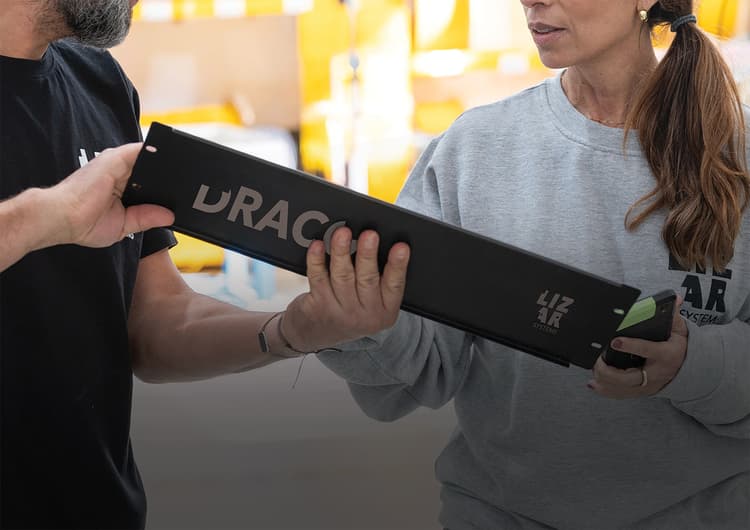
At the Digital ID Hub, the team showed DRACO, LIZAR's compact laser personalisation system for secure ID cards. DRACO personalises a card in about 30 seconds. Visitors saw specimen polycarbonate cards and discussed three points with the team: how data is engraved inside the card body, how each issuance is logged and controlled and how the same card can be verified in the field by NFC with ZAR ID.
LIZAR's equipment is designed, engineered and assembled in Europe. It supports centralised, distributed and portable deployment for national eID and civil registry programmes, migration and humanitarian projects, critical infrastructure and banking.
To discuss a project, use the demo request page on the LIZAR website.
Next: TRUSTECH 2026 and LisbonID 2027
The conversation continues in Paris. LIZAR Systems exhibits at TRUSTECH, from 1 to 3 December 2026 at Paris Expo Porte de Versailles, with live demonstrations of laser personalisation and AI quality inspection.
In 2027 it returns to Lisbon. The second LisbonID Conference takes place on 25 and 26 May 2027 at Fundação Oriente, with roundtables for European ministries and eIDAS 2.0 demonstrations.
Frequently Asked Questions
What is LID Cabo Verde?
LID Cabo Verde is an event on legal and digital identity. It brought together public bodies, identity specialists and technology partners for talks, a panel and a Digital ID Hub with live demonstrations.
When did LID Cabo Verde 2026 take place?
On 2 November 2026, in Cabo Verde.
How many people in the world lack proof of legal identity?
About 800 million, according to the World Bank ID4D Global Dataset 2025. That is roughly one person in ten.
What does moving from documents to attributes mean?
Instead of asking for copies of documents, a service authenticates the person, checks the competent source directly and receives only the attribute it needs, such as age or residence.
Why do digital identity systems still need physical ID cards?
A secure physical card is the trusted starting point of digital identity. With a chip, it can be verified by NFC offline and used to activate online services.
What did LIZAR Systems show at LID Cabo Verde?
DRACO, its compact laser personalisation system for secure ID cards, together with specimen polycarbonate cards and field verification by NFC with ZAR ID.
What are the next events on secure identity?
TRUSTECH, from 1 to 3 December 2026 at Paris Expo Porte de Versailles, and the LisbonID Conference, on 25 and 26 May 2027 at Fundação Oriente in Lisbon.
Related reading
- LIZAR at the L.ID Cabo Verde Workshop: Secure Identity, from Issuance to Trust
- TRUSTECH 2026: A Visitor’s Guide to Secure Identity, Issuance and Digital Trust
- LIZAR at TRUSTECH 2026
- LisbonID Conference 2027
Sources
Share this resource