Oct 30, 2026
TRUSTECH 2026: A Visitor’s Guide to Secure Identity, Issuance and Digital Trust
TRUSTECH returns to Paris Expo Porte de Versailles from 1 to 3 December 2026. It is one of the main European meetings for people who issue, secure and verify identity and payment credentials: ministries and civil registries, security printers, banks, integrators and technology suppliers.
This year’s edition comes at a particular moment. The deadline for every EU Member State to offer a digital identity wallet falls at the end of 2026. The phase-out of non-compliant ID cards by 2031 is turning into concrete renewal plans. AI is moving from presentations into production equipment. This guide covers the topics worth following, the questions to ask on the stands and how to get the most out of three days.
Why TRUSTECH 2026 Matters
Three shifts make this edition more useful than most.
The wallet goes live. Member States have to provide at least one certified European Digital Identity Wallet by the end of 2026, and regulated businesses must accept it roughly a year later. Many visitors will arrive with the same question: how do physical cards and digital wallets work together in practice?
The 2031 renewal wave takes shape. Regulation (EU) 2025/1208 keeps the deadlines of the original ID card regulation. Non-compliant cards stop being valid by 3 August 2031. Authorities are now sizing the capacity they will need, and many are looking at decentralised issuance.
AI arrives in issuance. Automated quality inspection, anomaly detection and assistants for operators are appearing in personalisation equipment, not only in biometric matching. The question is no longer whether AI can help, but how to control it.
Topics to Follow
Physical and digital identity together
Look for demonstrations that start with a physical card and end in a wallet: reading the chip by NFC, verifying the issuing state’s signature and transferring the data. Ask how suppliers handle lost phones, PIN resets and citizens who do not want a wallet. The strongest answers treat the card and the wallet as one credential used through several channels.
Decentralised and mobile issuance
Counter issuance of ID cards and passports, in minutes, is now a realistic option for many authorities. Look at desktop laser personalisation systems, compact passport printers and mobile kits. Ask about time per card, security of the machine, remote locking, offline operation and power supply in the field.
Laser personalisation and security features
Laser engraving on polycarbonate remains the reference for government credentials. Watch for advances in colour laser images, CLI and MLI, transparent windows, tactile features and edge engraving. Ask to see features engraved live, not only finished samples.
AI quality inspection
The most practical use of AI in issuance is checking every card as it is produced. Ask what the system inspects, how it was validated, what happens when a card is flagged and where the data is processed. Ask for detection and false-reject rates measured on real cards.
Sovereignty and supply chains
Governments are paying more attention to where equipment is designed and built, who services it and where identity data goes. Ask exhibitors where their hardware is made, which parts of the software they control and whether they can deploy without external cloud dependencies.
Payments and banking
TRUSTECH also covers payment credentials. Look for in-branch instant issuance, metal and premium cards, and the convergence of payment and identity on the same devices.
Questions to Ask on the Stands
- Issuance. Question: What is the time from data received to card delivered? Why ask it: Counter service depends on it.
- Security. Question: How is a lost or stolen unit locked? Why ask it: Decentralised networks need it.
- Inspection. Question: What does the system check on every card? Why ask it: Errors reach citizens otherwise.
- Card bodies. Question: Which polycarbonate suppliers are qualified? Why ask it: Avoids lock-in and delays.
- Wallet. Question: How does your card or system support wallet activation? Why ask it: eIDAS 2.0 makes the card a gateway.
- Fleet. Question: Can I see the management console with many units? Why ask it: Fifty sites need one view.
- Sovereignty. Question: Where is the hardware built and the data processed? Why ask it: Part of national security.
- References. Question: Can I speak to a programme of similar size? Why ask it: Proof beats brochures.
Planning Your Visit
Before the show
Write down the two or three decisions your organisation must take in the next year. A tender for desktop personalisation systems, a wallet integration plan, a renewal campaign. Pick exhibitors and sessions that help with those decisions, and book meetings in advance. Stands with live demonstrations get busy.
During the show
Use the first morning to walk the floor and see what is new. Keep the afternoons for meetings. Ask for live demonstrations on real card bodies. Take photos of the details that matter, such as the management console or the inspection report, not only of the machines.
After the show
Within a week, compare notes across your team while the details are fresh. Send each shortlisted supplier the same follow-up questions so their answers can be compared. Ask for test cards on your own card body.
LIZAR at TRUSTECH 2026
LIZAR Systems exhibits at TRUSTECH 2026 with a dedicated stand. The team runs live demonstrations of laser personalisation and AI quality inspection.
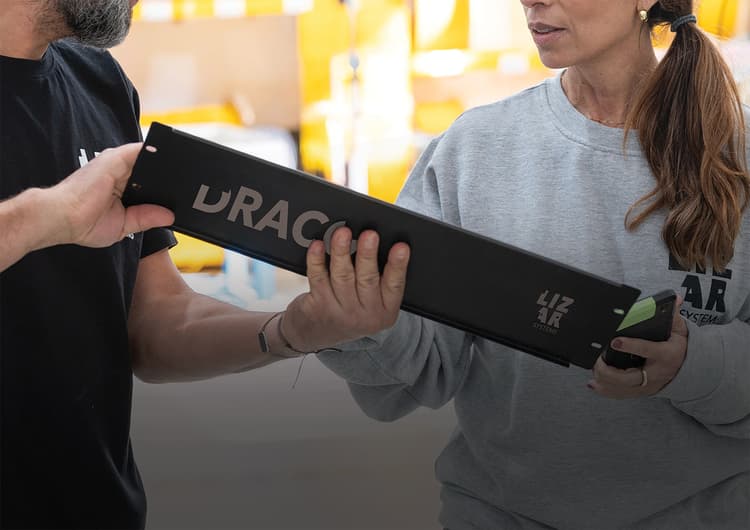
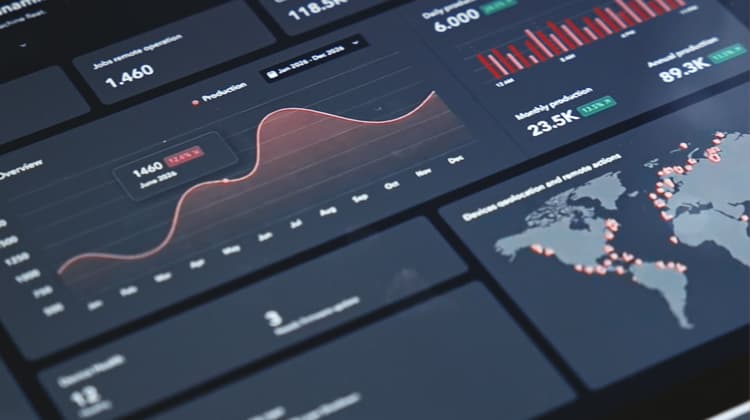
Visitors can see DRACO, LIZAR’s compact laser personalisation system for secure ID cards, which personalises a card in about 30 seconds, and VARAN, its modular passport and document personalisation system. The team will also show how LIZAR’s platform manages fleets of issuance devices and how AI checks each card after engraving.
LIZAR’s equipment is designed, engineered and assembled in Europe. It supports centralised, distributed and portable deployment, for national eID and civil registry programmes, migration and humanitarian projects, critical infrastructure and banking.
To book a meeting at the stand, use the demo request page on the LIZAR website and mention TRUSTECH.
After Paris: LisbonID 2027
The conversation continues in Lisbon. The second LisbonID Conference takes place in May 2027, with a larger exhibition, roundtables for European ministries and eIDAS 2.0 demonstrations. Calls for speakers are open. The first edition, in May 2026 at Fundação Oriente, brought together governments, regulators, banks and suppliers for two days on European digital identity.
Frequently Asked Questions
When and where is TRUSTECH 2026?
TRUSTECH 2026 takes place from 1 to 3 December 2026 at Paris Expo Porte de Versailles, in Paris.
Who should attend TRUSTECH?
People who issue, secure or verify identity and payment credentials: government agencies, civil registries, security printers, banks, integrators and technology suppliers.
What are the main identity topics at TRUSTECH 2026?
The rollout of the EU Digital Identity Wallet, the 2031 renewal of non-compliant ID cards, decentralised and mobile issuance, laser personalisation, AI quality inspection and technological sovereignty.
What can I see at the LIZAR stand?
Live demonstrations of laser personalisation and AI quality inspection, the DRACO card personalisation system, the VARAN passport and document system and fleet management tools.
How can I book a meeting with LIZAR at TRUSTECH?
Use the demo request page on the LIZAR website and mention TRUSTECH in your message.
What should I ask exhibitors about issuance equipment?
Time per card, machine security and remote locking, automated inspection, qualified card bodies, fleet management, origin of the hardware and references from similar programmes.
Is there a follow-up event on European digital identity?
Yes. The LisbonID Conference returns in May 2027 in Lisbon, with roundtables for European ministries and eIDAS 2.0 demonstrations.
Related reading
- EIDAS 2.0 and physical ID cards
- AI in ID personalisation
- Desktop laser engraving systems
- LIZAR at TRUSTECH 2026
Sources
Share this resource